Filtration at the critical control points of process-air, steam and liquid systems
Long before the Food Safety Modernization Act (FSMA) was adopted in 2011, food producers in the US had to produce safe and wholesome food, as required by Section 110 of Title 21 of the US Code of Federal Regulations. Additional reasons to eliminate potential hazards at a plant, besides ensuring compliance with standards, are care for consumers and maintaining brand reputation.
Over the years, various industry norms and standards have defined ways to improve food safety. These include management methods and equipment designs aimed at improving the safety and quality of food products. One of the practical recommendations is the creation of a Hazard Analysis and Critical Control Points (HACCP) plan. For some producers, creating such a plan is mandatory.
What is a HACCP plan?
In the HACCP plan, the producer identifies all the critical control points of the process. These are the places where there is a risk of biological, chemical or physical contaminants entering the system and, accordingly, the manufactured product. For each such point at the plant, measures must be taken to reduce the risk of a hazardous situation to acceptable limits.
Why is it important to include utility systems in the HACCP plan?
A filtration system is a core component of the HACCP plan, regardless of whether it is mandatory or recommended for your enterprise.
At most food productions, compressed air, gases such as nitrogen, water and other liquids, as well as process and culinary steam, are widely used. These media are the main way of transferring oil, microbes or solid particles from external sources or production equipment. The main way to control such risks is filtration.
How do the HARPC and HACCP plans differ and which of them is applicable to a given production?
Hazard Analysis and Risk-Based Preventive Controls (HARPC) planning is aimed at reducing risks throughout the company's supply chain. In accordance with the Food Safety Modernization Act (FSMA) of 2011, a HARPC plan must be adopted at practically all food productions.
The HACCP plan is aimed at managing contamination risks inside of the production process. In accordance with FSMA requirements, the use of a HACCP plan by producers of juice, seafood, poultry and meat is mandatory. For all other producers, this plan is recommended for use.
At which points of utility systems is filtration usually required?
Industry: Spring water Problem: A producer may claim that its water has «natural purity» only if it meets certain requirements and…
Usually the following three areas can be identified, where there is a risk of contamination of utility systems and filtration must be ensured.
1. Utility rooms
These are the rooms where water lines, boilers, vessels and generators are located. From this room, process gases and liquids are supplied to all consumers at the production, so any contaminants that enter the water, air, gases and steam here can spread downstream.
In the area between this room and the process, it is important to ensure pre-cleaning.
2. End points of use
Process gases that have passed through pipelines or vessels may have direct or indirect contact with food products downstream. Before using process gases in the production process, it is important to filter them. Filters for sterile air, sterile liquids and culinary steam are best located at the end points of use in each utility line.
3. Before packaging
The last opportunity to remove the remaining contaminants from the product exists before the sealed-packaging stage. It is also necessary to pre-filter the water, steam and compressed air used to form, clean or open the packaging.
How can liquids, air and steam be filtered at a production facility?
Every food production is unique and may be subject to special industry standards, for example 3-A sanitary standards, the standards of the British Retail Consortium (BRC), etc. However, there are general principles of process-gas filtration that apply to most food productions. Below are the hazards unique to each process gas and the recommended filtration methods at critical control points.
Air and gases
Applications and hazards
Compressed air is used to transport ingredients, create the texture of food products, dry equipment and produce containers by blow-molding. Other gases are also used in food production, for example pure oxygen, carbon dioxide and nitrogen. Equipment used to produce or store such gases can become a site of mass growth of microorganisms in the presence of condensate and lubricants. If interchangeable vessels are used to feed gases into the process, airborne contaminants can enter open pipelines when the vessels are replaced.
Tip. For optimal removal of oil and condensate from compressed air, choose a filter made of oleophobic and hydrophobic material, tested in a wet state.
Filtration methods
In the utility room, ensure the removal of moisture and oil from the compressed air before it enters the process line. For this, you can use a cyclone separator that will remove most of the moisture, one or more 1–5 micron coalescing pre-filters to remove aerosols, and an adsorption air dryer to remove the remaining vapors. Downstream, in places where sterile air is required, install an absolute 0.2-micron fine filter on the equipment at each point of use.
Industry: Spring water Problem: A producer may claim that its water has «natural purity» only if it meets certain requirements and…
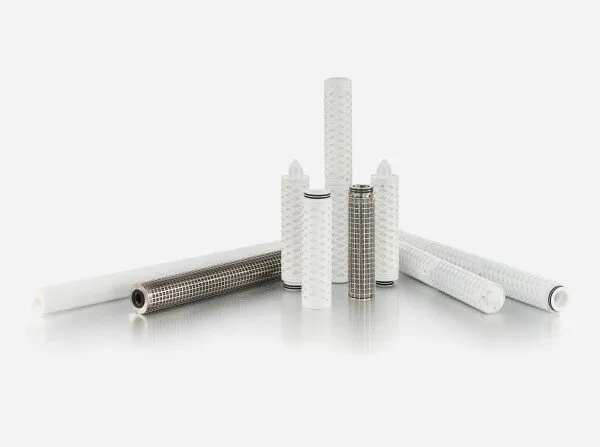
The Donaldson P-SRF borosilicate depth filters are characterized by a retention level of 99.99999 % (log reduction value (LRV) 7) for particles 0.2 microns in size and larger. These filters ensure safe sterile filtration in compressed-air, technical-gas and venting systems. The filters are equipped with inner and outer guards. The end caps are made of stainless steel. The filters are distinguished by high thermal resistance and mechanical strength; they withstand up to 250 hot-steam sterilization cycles.
You may also like…
Industry: Spring water Problem: A producer may claim that its water has «natural purity» only if it meets certain requirements and…
Sterile elements
Donaldson sterile filter elements ensure safe sanitary filtration of compressed air and process gases.
Water
Applications and hazards
Process water is used for washing and sterilization, rehydration and product preparation, as well as in heating boilers and product-extraction systems. Contaminants can be present in both tap water and spring water, so the condition of equipment such as boilers can deteriorate over time and deposits can form on surfaces. If the water is used as part of the product, activated carbon for chlorine removal can become a food source for a bacterial biofilm that clogs expensive reverse-osmosis membranes.
Tip. If the service life of a reverse-osmosis membrane does not exceed two years due to biofilm formation, use a more efficient pre-filter. A pleated depth filter material with guaranteed retention efficiency will reliably protect the reverse-osmosis system and reduce costs.
Filtration methods
In the utility room, pre-cleaning of the source water must be arranged using a nominal 10-micron polypropylene depth filter. This is a sufficient level of filtration for cleaning-in-place (CIP) and steaming-in-place (SIP) systems. If the source water contains a large amount of suspended solids, an assembly of 50-, 20- and 10-micron pre-filters may be required. Install bacteria-retaining 0.2-micron sterile filters in the water lines for washing, product preparation, mixing and injection, where there is direct or indirect contact with food products. Filters of this rating have an effect on the water similar to pasteurization.
Industry: Spring water Problem: A producer may claim that its water has «natural purity» only if it meets certain requirements and…
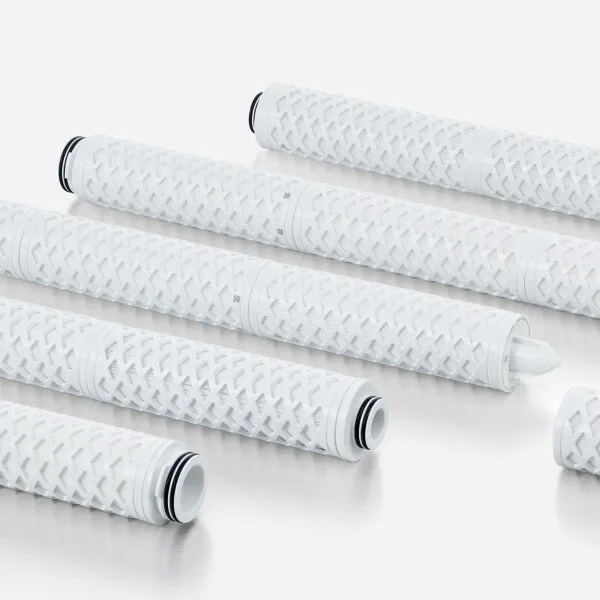
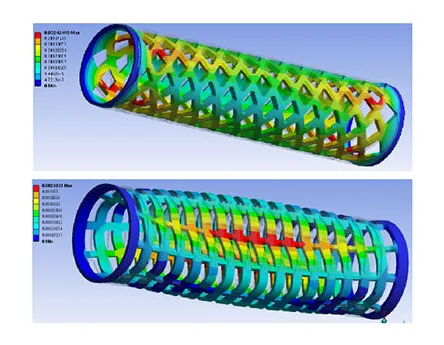
The Donaldson LifeTec™ filter material is folded inside a polypropylene cage, which increases the filter surface area by 20% and makes it possible to retain more contaminants without reducing the liquid flow. The filter material has a structure with larger pores at the inlet; at the outlet the pores narrow. This results in the retention of contaminant particles of a certain size. The cage design prevents bending and crushing at high flow. The LifeTec filter material was developed taking into account the wishes of leading beverage producers.
You may also like…
Industry: Spring water Problem: A producer may claim that its water has «natural purity» only if it meets certain requirements and…
Filter elements
Donaldson offers filter elements for protecting the integrity of liquids and cartridge filter elements for improving product characteristics.
Steam
Applications and hazards
Process steam is used as an indirect source of heat. Culinary-steam injection is used to prepare products or to sterilize surfaces in contact with food products. The temperature of the steam prevents bacterial growth. The main contamination risk is associated with corrosion in carbon-steel or galvanized-steel steam lines, where condensate and high temperature are constantly present. Rust can contaminate food products, clog spray lines and damage stainless-steel equipment.
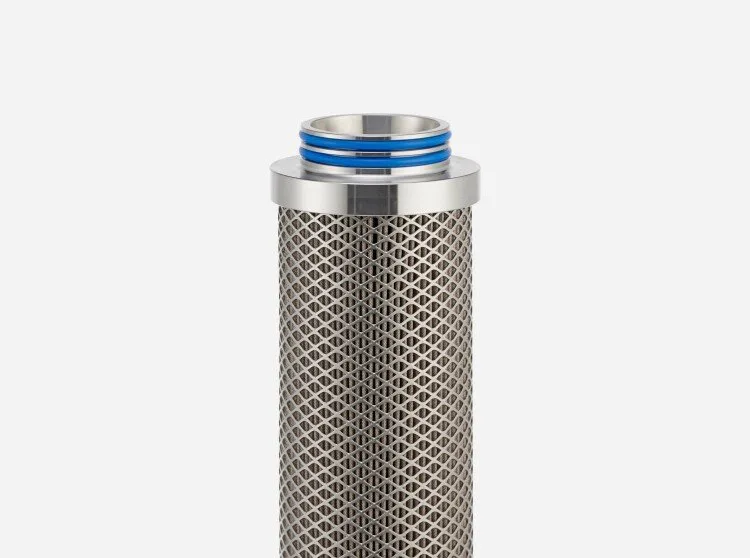
The Donaldson P-EG filter elements for steam are designed for the cleaning of process and culinary steam in a flow range from 45 to 7,750 kg/h (100–17,100 lb/h) at a pressure of 3 bar (50 psig). They are characterized by low differential pressure even at high flow and contribute to energy savings. The P-EG series includes filter elements in 20 sizes with different connections and treatment types.
Filtration methods
Maintaining a relatively low water content in the steam reduces the risk of corrosion and minimizes the entry of water from the boiler into the product. To remove most of the condensate, install a coalescing pre-filter (called an entrained-liquid separator) in each steam line immediately before the process reducing valves. Removing condensate from the steam lines prevents premature wear of the valves. At each end point of use, install a fine steam filter. Culinary steam for direct injection, as well as for cleaning-in-place or sterilization-in-place (CIP/SIP) systems, requires the removal of 95 % of particles 2 microns in size.
Tip. At high temperatures and pressures, filters with carbon tubes can release particles. Use filters made of high-quality stainless steel, especially if the production process is subject to the Pasteurized Milk Ordinance.
You may also like…
Industry: Spring water Problem: A producer may claim that its water has «natural purity» only if it meets certain requirements and…
P-EG
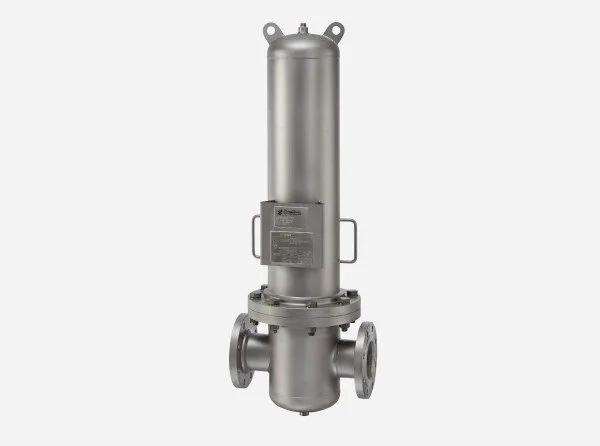
The economical Donaldson P-EG stainless-steel filter housings are available with different types of connections, including NPT threaded connections, ANSI flanged connections, welded end connections, etc.
Are there general rules for the layout of a filtration system?
Effectiveness and efficiency
To create an optimal filtration system, you need to choose filters with sufficient efficiency and retained-particle size, and correctly determine their installation locations. Below are important principles to follow when designing and maintaining a system for filtering air, gas, liquids and steam.
- Redundancy: installing filters at several points of a utility line is characterized by increased reliability compared with using a single filter. Using a sequence of filters: protect expensive fine filters by installing pre-filters in front of them.
- Distance: pipelines connecting the utility rooms with the points of contact with food products can become sources of condensate, oil, contaminants and microbes. Place fine filters as close as possible to the end points of use.
- Maintenance: install pressure gauges before and after the filters to track sharp pressure fluctuations, which may indicate the presence of damage. Replace filters when the set pressure drop is reached.
How to find out whether a filter will be effective?
The retention efficiency of a filter is indicated on the label as the log reduction value (LRV). This value corresponds to the percentage of contaminants the filter can retain. The marking "LRV 7" means that a 0.2-micron filter is guaranteed to retain 99.999998 % (7 nines) of the reference contaminant particles 0.2 microns in diameter. All Donaldson filters have an LRV 7 rating, which corresponds to the highest requirements of the industry standard.
What must be taken into account when choosing filters?
Carefully choose filter elements. The production of filters is not standardized, so it would not hurt to check the technical documentation. Establish a partnership with a filter manufacturer that will help you understand the nuances of its products. In addition, take the following factors into account.
- Ratings: pay attention not only to the size of the retained particles but also to the filtration efficiency (the percentage of retained particles). For example, an "absolute" 2-micron filter must retain 99.98 % of all particles 2 microns in size according to the manufacturer's testing results.
- Filter material: choose filters with a long service life. Cartridge filter elements are more preferable than elements created by the melt-blown method. Pleated cartridge filters have 12 times the surface area and dirt-holding capacity, which extends the filter's service life.
- Certification: choose equipment and products with the "3-A" marking. It indicates that an independent third party successfully carried out a check of the sanitary design, including the grade of steel and the presence of a minimal number of places where bacteria could accumulate.
- Return on investment: consider the integrity and service life of the filters. Filters can wear out quickly under harsh processing, cleaning and sterilization conditions. As noted above, melt-blown filters may have a lower initial cost, but pleated filters from a reliable manufacturer withstand more sterilization cycles and provide increased filtration efficiency. This makes it possible to minimize contamination risks and reduce overall costs.
An important warning about the labeling of sterile-air filters
Do not think that a filter with a marking indicating the retention of very small particles (for example, 0.01 microns) is better than a 0.2-micron filter. Such claims by some manufacturers can be misleading. In practice, retaining 0.01-micron particles is not so difficult, because they move chaotically. This phenomenon is known as Brownian motion. The most difficult thing retain a 0.2-micron particle, which corresponds approximately to the size of the smallest bacteria that can be present in the system. If you need a sterile-air filter, install a 0.2-micron filter with high retention efficiency. The standards governing food and beverage production require the use of filters with an LRV 5 value or higher, which corresponds to filters with a guaranteed retention of 99.9998 % of contaminants. Donaldson filters exceed the requirements of these standards and have a guaranteed LRV 7 value.
Are there resources for familiarizing yourself with recommended filtration methods?
There are a large number of standards and norms regulating the parameters of sterile air, steam and liquids used in production processes. To familiarize yourself with the bodies that set standards and to find out which processes and equipment their requirements apply to, download our brochure with an overview of regulations and best practices.
Every production is unique in its own way, but at enterprises producing certain food products and beverages, certain similarities can be found. Donaldson has developed several typical filtration schemes for some applications. Remember that they are offered only as an example and they should not be used to create your own filtration systems without taking into account the features of the production and the technological processes.
Overview of regulations and best practices ›
Bottled-water filtration scheme ›
Cheesemaking filtration scheme ›
Soft-drink filtration scheme ›