An interview with filtration specialist Scott Grimes
Food and beverage producers work under conditions of tightening standards, growing production needs and limited resources. To cope with these demands, producers and technologists turn to qualified specialists for help.
Industry: Spring water Problem: A producer may claim that its water has «natural purity» only if it meets certain requirements and…
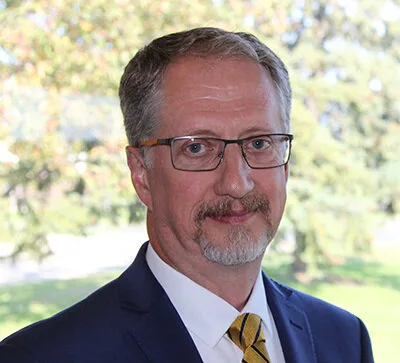
Scott Grimes, strategic-accounts manager of Donaldson's process filtration division, tells how to earn trust in this field in modern conditions. He communicates closely with the managers of production enterprises and advises engineers on the modernization of sterile-filtration systems.
What are the main features of food and beverage production?
On the overall scale of production, the role of filtration may seem insignificant, yet the safety of products and the health of consumers depend entirely on it. The integrity of the process depends on the purity of water, steam and compressed air. My responsibilities include determining the needs of the production, identifying the points of contact between media and the process equipment or products, and selecting appropriate filtration solutions that make it possible to prevent contamination of the product with tiny particles.
What are the main changes in this industry?
Today we are observing a lack of professional training and growing knowledge gaps. The need for contamination control and more modern technologies is growing, yet the market continues to become saturated with goods. The number of market participants aiming for quick profit is growing. An experienced solutions supplier has a good idea of what processes take place upstream and downstream of the filter. They see a fuller picture of what is happening compared with what the production owners or their consultants can describe, and can recommend the optimal filtration-system components.
What skills must a process-filtration specialist have?
First, you need to understand technical matters. You must speak the same language as the engineer or plant manager and know all the intricacies of designing and assembling a filtration solution. There are no trifles in this business. Second, you must understand how the client's business works. Often the correct solution can be proposed only after assessing its economic effect. If you prove to the client that the investment will bring a benefit in the form of reduced energy consumption or less downtime, they will be ready to consider upgrading the filtration systems.
Give an example of finding a balance between business needs and technologies.
The success of a solution often depends on the operating conditions. Recently a yogurt producer approached us. They needed to dose strawberries from a large vessel into yogurt cups using sterile compressed air. This task, however, was complicated by one condition: the machine had to operate between sterilization-in-place (SIP) cycles without stopping. I said: "To meet the performance requirements, we will need to significantly increase the size of the solution". The producer needed the help of a partner who would understand the process conditions well and would appropriately size the solution. When choosing optimal filtration systems, the following should be taken into account not only a product-protection factor. It is also necessary to take into account the available resources for maintenance: energy, labor, time.
Brief information about Scott Grimes
- A pull toward industry: Scott grew up in Western Pennsylvania, a land of steel mills. "I was always fascinated by production — machines of incredible size and their coordinated work."
- Career: 29 years in the markets of instrumentation, control systems and process filtration, including ten years of work in the heavily regulated mining and nuclear-energy industries. Worked in close cooperation with engineers.
- Important projects: optimizing waste disposal at a limestone mine to prevent contamination of the aquifer; presenting information to the US Food and Drug Administration (FDA) on non-aseptic filtration in the pharmaceutical industry.
- Why did you change your hard hat for a hairnet? "It's much cleaner here. I enjoyed studying yogurt and beer production. Everyone should constantly learn something new."
- What do you like about working at Donaldson? "It is a vertically integrated company. We develop our own filter materials and use them in the components we create. In research and development alone, we invested about 60 million dollars over the past year. It is pleasant for me to realize that our engineers and specialists in various fields of knowledge work in more than 100 technical laboratories.
- What do you like most about the work? "Working in close cooperation with customers; the confidence that any problem can be solved."
Is it necessary to understand laws in order to be aware of all the applicable norms?
Of course. I select only one of the system's components — the filter. However, the effect of industry standards, for example 3-A sanitary standards, extends to many components. I must make sure that the client understands which elements need to be added to the system to ensure its compliance with the applicable requirements. First it is necessary to familiarize yourself with the overall picture in order to discuss the proposed component more meaningfully.
What attracted you to process filters for the removal of microbes after working with enormous nuclear power plants?
I don't see much difference. Since 1990 I have been working with "dead-end filtration" technology. It can be imagined as a mosquito net on a window. Everything good passes into the house, and everything bad stays outside. It only requires applying a different approach to developing the filter material for a specific application and the ability to describe the solution meaningfully. It seems I manage to explain everything clearly both to engineers and maintenance staff and to buyers. They understand what I want to say.
You may also like…

Industry: Spring water Problem: A producer may claim that its water has «natural purity» only if it meets certain requirements and…
Food and beverages
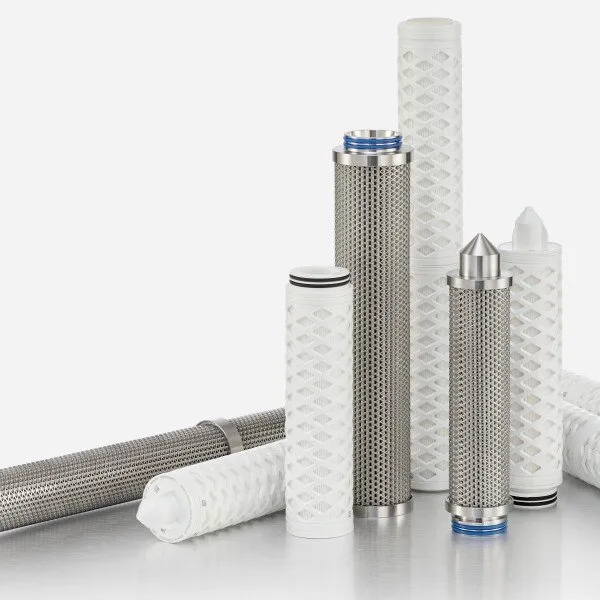
Donaldson offers a wide range of products for a variety of applications, from pre-cleaning to sterile filtration in systems with a wide flow range.
What are the prospects for the development of food and beverage production?
Technologies such as the Internet of Things (IoT) and blockchain will have an enormous impact. Blockchain platforms can trace a food product all the way down to the farm level. Some large retail chains already require such information from suppliers. This trend will continue to develop. As for the Internet of Things, Donaldson has begun developing solutions with connectivity support, which will make it easier for customers to manage filtration systems. Such solutions will allow us to expand the range of services provided through support for filtration management and outsourcing this function.
Is it necessary to understand laws in order to be aware of all the applicable norms?
Of course. I select only one of the system's components — the filter. However, the effect of industry standards, for example 3-A sanitary standards, extends to many components. I must make sure that the client understands which elements need to be added to the system to ensure its compliance with the applicable requirements. First it is necessary to familiarize yourself with the overall picture in order to discuss the proposed component more meaningfully.
What attracted you to process filters for the removal of microbes after working with enormous nuclear power plants?
I don't see much difference. Since 1990 I have been working with "dead-end filtration" technology. It can be imagined as a mosquito net on a window. Everything good passes into the house, and everything bad stays outside. It only requires applying a different approach to developing the filter material for a specific application and the ability to describe the solution meaningfully. It seems I manage to explain everything clearly both to engineers and maintenance staff and to buyers. They understand what I want to say.
What are the prospects for the development of food and beverage production?
Technologies such as the Internet of Things (IoT) and blockchain will have an enormous impact. Blockchain platforms can trace a food product all the way down to the farm level. Some large retail chains already require such information from suppliers. This trend will continue to develop. As for the Internet of Things, Donaldson has begun developing solutions with connectivity support, which will make it easier for customers to manage filtration systems. Such solutions will allow us to expand the range of services provided through support for filtration management and outsourcing this function.