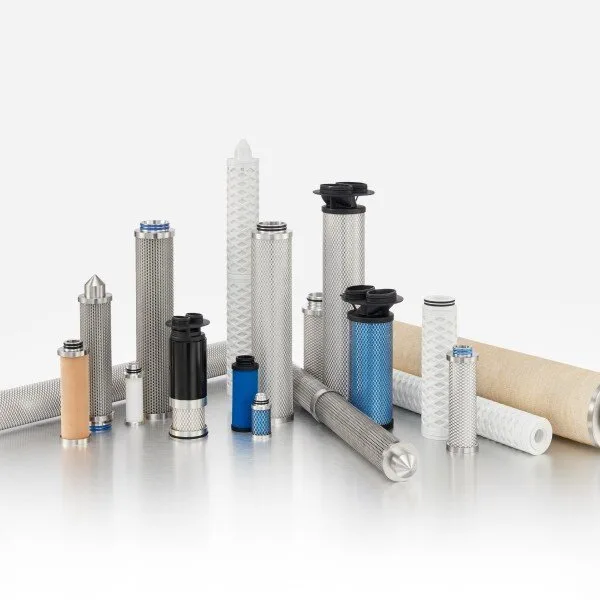
Take a sensible approach to choosing a solution
Author: Richard Juskowiak, Donaldson process filtration division
In many production processes, the product must spend a certain time in storage tanks. A tank can be used for temporary storage before packaging or for long-term storage until a certain reaction is complete. (An example of such a reaction is fermentation.)
"Storage is an important stage of production, the efficiency of which is achieved only if product spoilage is prevented."
The following three methods of preventing product spoilage during storage are the most common.
- Creating a protective environment in a tank.
- The use of sterile-air supply systems.
- Sterile-air tank venting.
All these methods effectively protect the product during storage, but they differ in the costs associated with them. Let us study all these methods in more detail.
Creating a protective environment in a tank
Many believe that creating a protective environment in a large tank during product storage is the best method of protection. Creating a protective environment in a tank consists of using an inert gas, for example nitrogen, to isolate the product from the external environment in order to prevent its spoilage. In the case of the production of combustible products, the system must be isolated from atmospheric air, since the oxygen it contains can lead to ignition. In addition, an oxygen-free atmosphere is used in the production of various products, from food to medicines. This makes it possible to prevent chemical reactions after which the product loses freshness or spoils. To exclude the product's contact with oxygen, nitrogen or another inert gas is pumped into the tank, which displaces the air and maintains a stable chemical balance. Creating a protective environment in a tank is a reliable method that, however, in some cases may be excessive if there are more economical methods that are just as effective. If nitrogen must be produced on site, an expensive nitrogen-production system will need to be purchased. If these initial investments seem too large, nitrogen cylinders can be purchased and delivered to the production. Before nitrogen is fed into a storage tank, in many cases it will need to be cleaned and dried. To provide such nitrogen filtration, filter housings and filter elements will need to be purchased. The total cost of creating a protective environment in a tank using nitrogen can reach tens of thousands of dollars.
Sterile-air supply system
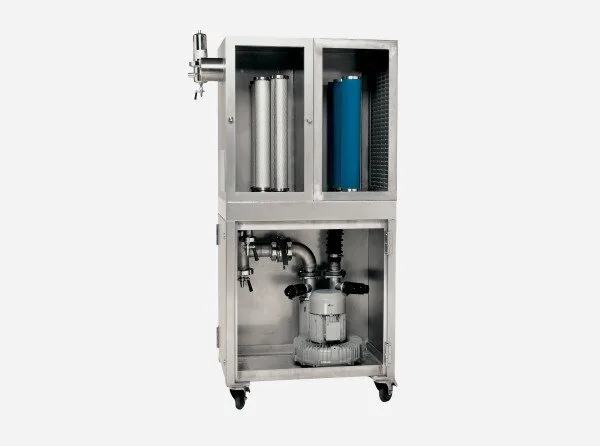
A sterile-air supply system is a closed sterile-air system that does not require an air-flow supply from a compressor. It protects the product from bacteria and dust, and also creates aseptic conditions favorable for aerobic fermentation. Depending on the production requirements, stationary or mobile sterile-air supply systems can be used. A sterile-air supply system is a comprehensive solution equipped with all the necessary components, including blowers, pre-filters and sterile air filtration. Depending on the scale of production, the cost of a sterile-air supply system can reach 20,000 dollars.
You may also like…
Industry: Spring water Problem: A producer may claim that its water has «natural purity» only if it meets certain requirements and…
P-SLF
The P-SLF sterile-air filtration unit is intended for systems with sensitive products, where sanitary and hygienic requirements are in force and a high air flow is required at low pressure, without bacteria and bacteriophages.
Sterile-air tank venting
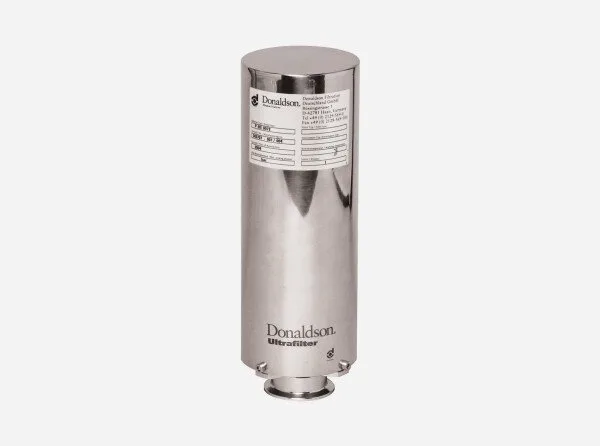
If the product does not need to be protected from oxidation, sterile-air tank venting can be used, which is just as effective as creating a protective environment and a sterile-air supply system, but much more economical. A vent valve is installed at the top of the storage tank. It allows air to freely exit and enter the tank to compensate for the change in the volume of the product it contains. A sterile filter element is installed in the housing of the vent valve. It cleans the air entering the tank of solid particles and bacteria that could lead to product contamination. Sterile-air tank vent valves are especially effective with a significant volume of air entering and being displaced from the tank. The initial investment in this case will include only the cost of purchasing the vent-valve housing and the sterile air filter element. The cost of a vent valve depends on the requirements and can be as little as one thousand dollars. Most sterile-air tank vent valves are compatible with cleaning-in-place (CIP) systems.
You may also like…
Industry: Spring water Problem: A producer may claim that its water has «natural purity» only if it meets certain requirements and…
P-BE filters for tank venting
Donaldson P-BE filter housings are intended for the cleaning of air used to vent stationary and transportable tanks.
Producers striving for economy can first study all the solutions for protecting the product during storage in order to avoid unnecessary spending on a solution with excessive efficiency.
See the full text of the article in the magazine Food Quality & Safety.