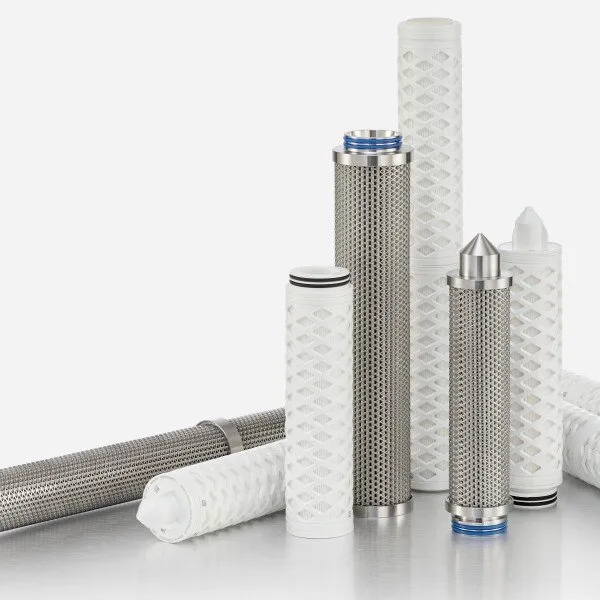
Chemical industry
Chemical enterprises often work with hazardous substances and reagents, which requires effective filtration systems to remove harmful vapors and aerosols.
- Application examples:
- Emission cleaning: Chemical filtration systems remove toxic gases such as ammonia, hydrogen sulfide and chlorine.
- Air recirculation: Reusing purified air reduces ventilation costs and lessens the impact on the environment.
- Biological filters: Used to decompose organic contaminants in the air.
- Advantages:
- Protecting workers' health.
- Compliance with environmental regulations.
- Reducing the risk of accidents and leaks of harmful substances.
Food industry
In the food industry, clean air is necessary to ensure hygienic conditions and prevent product contamination.
- Application examples:
- Purity classes: HEPA filtration systems are used to maintain sterile conditions in production facilities.
- Removal of odors and vapors: Chemical filters eliminate unwanted odors, preserving product quality.
- Humidity control: Filters with adsorbing materials prevent condensation and the growth of microorganisms.
- Advantages:
- Improving the quality and safety of food products.
- Reducing the risk of contamination.
- Compliance with hygiene and sanitation standards.
Pharmaceutical industry
Pharmaceutical enterprises require particularly strict air-purity standards for the production of high-quality medicines.
- Application examples:
- Laminar flows: Specialized filtration systems ensure the unobstructed movement of air in sterile zones.
- Removal of particles and microbes: High-efficiency HEPA and ULPA filters are used to protect products from contamination.
- Chemical vapor control: Chemical filters remove solvents and other harmful substances from the air.
- Advantages:
- Ensuring the sterility and safety of products.
- Compliance with international standards such as GMP (Good Manufacturing Practice).
- Minimizing the risks of cross-contamination.
Electronics industry
The production of electronic components requires exceptionally clean air to prevent product defects.
- Application examples:
- Cleanrooms: Filtration systems ensure a minimal number of particles in production areas.
- Removal of volatile organic compounds (VOCs): Chemical filters prevent the accumulation of VOCs, which can affect the quality of microchips and other components.
- Temperature and humidity control: Integrated filtration systems maintain optimal climatic conditions.
- Advantages:
- High precision and reliability of production processes.
- A reduction in the number of defects and increased productivity.
- Compliance with strict industry standards.
Metallurgy and woodworking
In these industries, large amounts of dust and harmful vapors are generated, requiring effective filtration to protect workers' health and preserve equipment.
- Application examples:
- Ventilation and cleaning systems: Mechanical filters remove dust and particles of metal or wood from the air.
- Removal of vapors and gases: Chemical and electrostatic filters eliminate harmful gases such as nitrogen and sulfur oxides.
- Air recirculation: Reusing purified air reduces the load on ventilation systems and saves energy.
- Advantages:
- Improving working conditions and reducing illness.
- Protecting equipment from corrosion and contamination.
- Compliance with environmental standards and reduced emissions.
Construction industry
Construction sites often face the problem of dust and aerosols, especially when working with concrete, paints and other materials.
- Application examples:
- Mobile filtration units: Easily movable systems for cleaning the air directly at the construction site.
- Filters for tools and equipment: Specialized filters are installed on vacuum cleaners and other tools to reduce emissions.
- Dust control: Wet-cleaning systems reduce the amount of dust in the air.
- Advantages:
- Reducing the dust level and improving visibility at the site.
- Protecting the health of builders and the environment.
- Accelerating construction processes through cleaner working conditions.